
Introduction
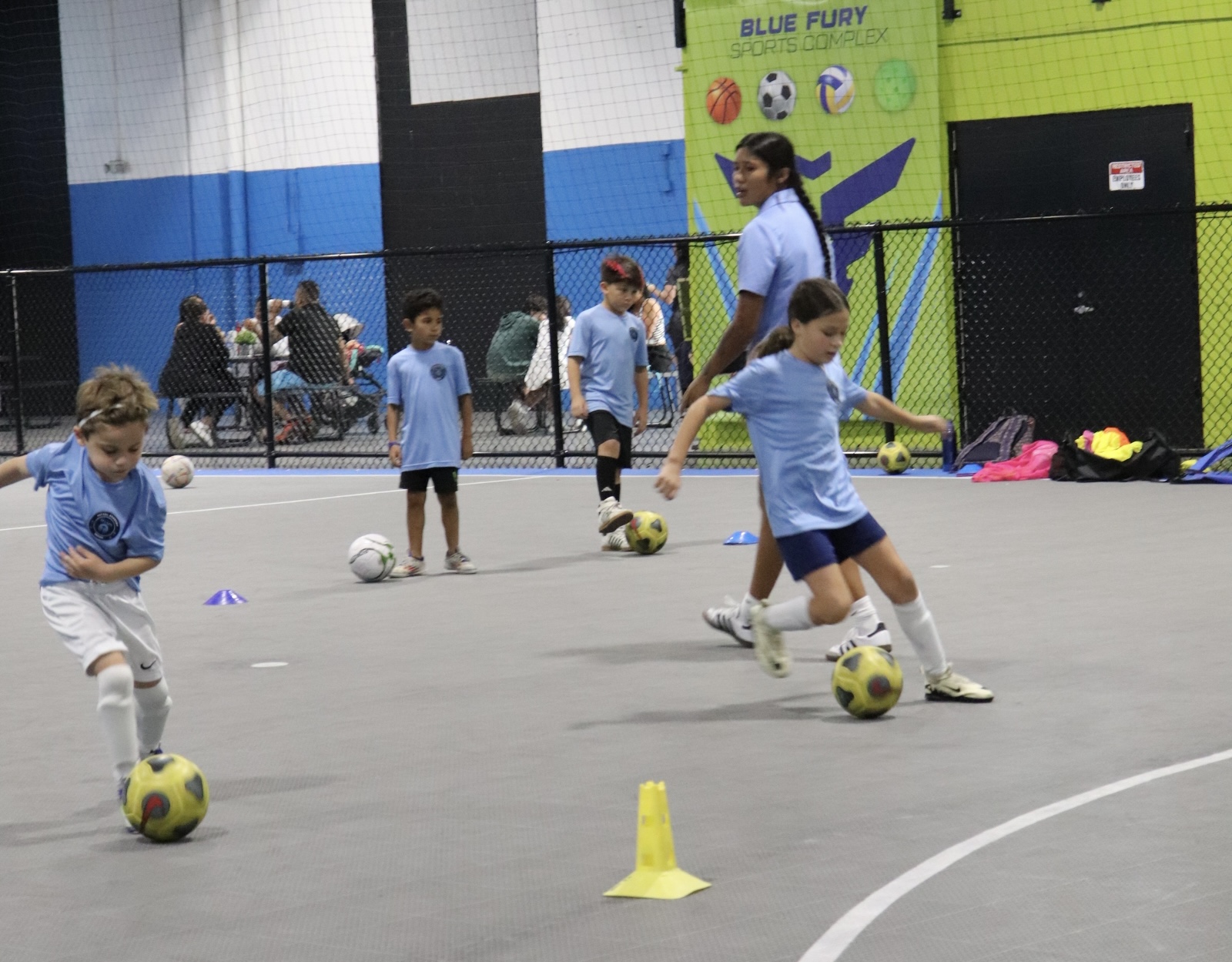
Parents across South Florida are increasingly searching for better ways to support their child’s soccer development. If you’ve come across youth futsal in Miami, you’re likely hearing that futsal helps players become more technical, confident, and intelligent on the ball.
But what exactly is futsal? How is it different from traditional soccer? And is it the right fit for your child?
This guide is designed to answer the most common questions parents ask about youth futsal training, what ages benefit most, how often kids should train, and how futsal fits into long-term player pathways. Whether your child is just starting or already playing competitively, this article will help you make an informed decision.
What Is Youth Futsal?
Futsal is a fast-paced, small-sided version of soccer played on a hard court with a smaller, weighted ball. Teams typically play 4v4 plus a goalkeeper, which means more touches, more decisions, and more involvement for every player.
Unlike traditional outdoor soccer, futsal emphasizes:
- Close ball control
- Quick passing
- Movement in tight spaces
- Creativity and problem-solving
Because the game is played in confined areas, players are constantly challenged to think faster and execute skills under pressure. This is why futsal has become a core part of youth development models around the world.
Is Futsal Better Than Soccer for Kids?
This is one of the most common questions parents ask — and the answer is important.
Futsal is not a replacement for soccer, but it is one of the best tools to accelerate development, especially at young ages.
Key benefits futsal offers young players:
- Improved first touch
- Faster decision-making
- Better awareness and scanning
- Increased confidence on the ball
- Comfort playing under pressure
Many of the world’s top players — including Messi, Neymar, and Iniesta — grew up playing futsal. The skills they developed indoors transferred directly to outdoor soccer.
For youth players, combining soccer and futsal often leads to more complete development than soccer alone.
What Age Should Kids Start Futsal?
Futsal can benefit players at almost any age, but its impact varies by stage.
Ages 6–8
- Focus on fun, coordination, and comfort with the ball
- Futsal helps young players fall in love with the game
- No pressure — just skill discovery
Ages 9–12
- One of the most important development windows
- Futsal accelerates technical ability and confidence
- Players learn to solve problems independently
Ages 13+
- Futsal sharpens tactical awareness
- Helps players play faster and smarter
- Complements competitive outdoor soccer schedules
At academies like Oasis Futsal Academy in Miami, training is adapted to each age group to ensure players are challenged appropriately while still enjoying the process.
How Many Days Per Week Should Kids Train?
Training frequency depends on age, experience, and goals, but general guidelines apply.
- 1 day per week: Introduction or supplemental training
- 2 days per week: Strong development pace for most players
- 3+ days per week: For highly motivated or competitive players
Futsal sessions are typically shorter and more intense than outdoor practices, making them easier to balance alongside school and soccer commitments.
The key is consistency, not overload.
Youth Futsal Opportunities in Miami
Miami has become a growing hub for youth futsal, with more families recognizing its benefits for player development. However, not all programs are created equal.
When evaluating youth futsal academies, parents should look for:
- Qualified, development-focused coaches
- Structured training sessions
- Age-appropriate groupings
- Clear communication about goals and expectations
Structured academies, such as Oasis Futsal Academy, focus on long-term player growth rather than short-term results. This creates an environment where players can improve while enjoying the game.
Can Futsal Lead to Higher-Level Soccer Pathways?
Futsal plays a powerful role in player development, but it’s important to set realistic expectations.
Futsal helps players:
- Become technically sharper
- Adapt faster to higher levels
- Stand out for their comfort on the ball
It does not automatically guarantee college or professional opportunities. However, players who develop strong technical foundations through futsal are often better prepared when opportunities arise.
In many cases, futsal gives players the tools they need to succeed when combined with:
- Outdoor soccer competition
- Good coaching
- Consistent training habits
How to Get Started With Youth Futsal in Miami
For parents exploring youth futsal for the first time, the best next step is often simple: try a session.
Before committing long-term, look for:
- A welcoming environment
- Coaches who communicate clearly
- Training that balances challenge and enjoyment
Most reputable programs offer evaluations or tryouts so families can determine if it’s the right fit.
If you’re exploring youth futsal in Miami and want to see whether it aligns with your child’s goals, booking a tryout is often the easiest way to start.
Conclusion
Youth futsal has become one of the most effective development tools in modern soccer. For families in Miami, it offers an opportunity to build technical skills, confidence, and game intelligence in a fast-paced, engaging environment.
When combined with traditional soccer, futsal helps young players grow into more complete, adaptable athletes — while still enjoying the game they love.
Leave a Reply